
Sensory overload is what happens when there is simply too much coming in: noise, light, movement, all at once, until your system hits its limit. It is common for autistic and ADHD people, and honestly it can happen to anyone after a long, loud day.
The tools that help are the ones that turn the volume down rather than adding more input. Here are calming games and tools for sensory overload, chosen to be low-stimulation and gentle.
What sensory overload feels like
It can feel like irritation, panic, or a need to shut down and escape. Sounds get sharper, lights feel harsher, and it becomes hard to think or talk. The instinct to withdraw is your system asking for less input, and that is exactly what to give it.
Tools and games to dial down the noise
Noise-cancelling and dim light
The first move is less, not more: headphones or earplugs, dimmer screens, a quieter room. Everything else works better once the input drops.
Ponoki
Ponoki is deliberately calm: dark, soft visuals, no ads, no loud sound, no flashing. Zen Mode lets you mask harsh noise with steady rain or brown noise, and Lumen gives you one soft thing to focus on while you settle.
Brown noise and nature apps
A steady, low sound can mask jarring background noise, which many people find grounding during overload.
A slow breathing tool
Once the input is lower, a slow exhale helps your body come down from the spike.
What to avoid during overload
- Bright, loud, fast games with flashing effects and timers.
- Anything with ads, which are engineered to grab your attention.
- Doomscrolling, which piles on more input.
- Forcing yourself to stay in the overwhelming environment if you can step away.
Why Ponoki works during overload
Ponoki is built to be low-stimulation on purpose. The whole thing is dark and soft, there are no ads and no jarring sounds, and nothing flashes or rushes you. When the world is too much, that quietness is the point.
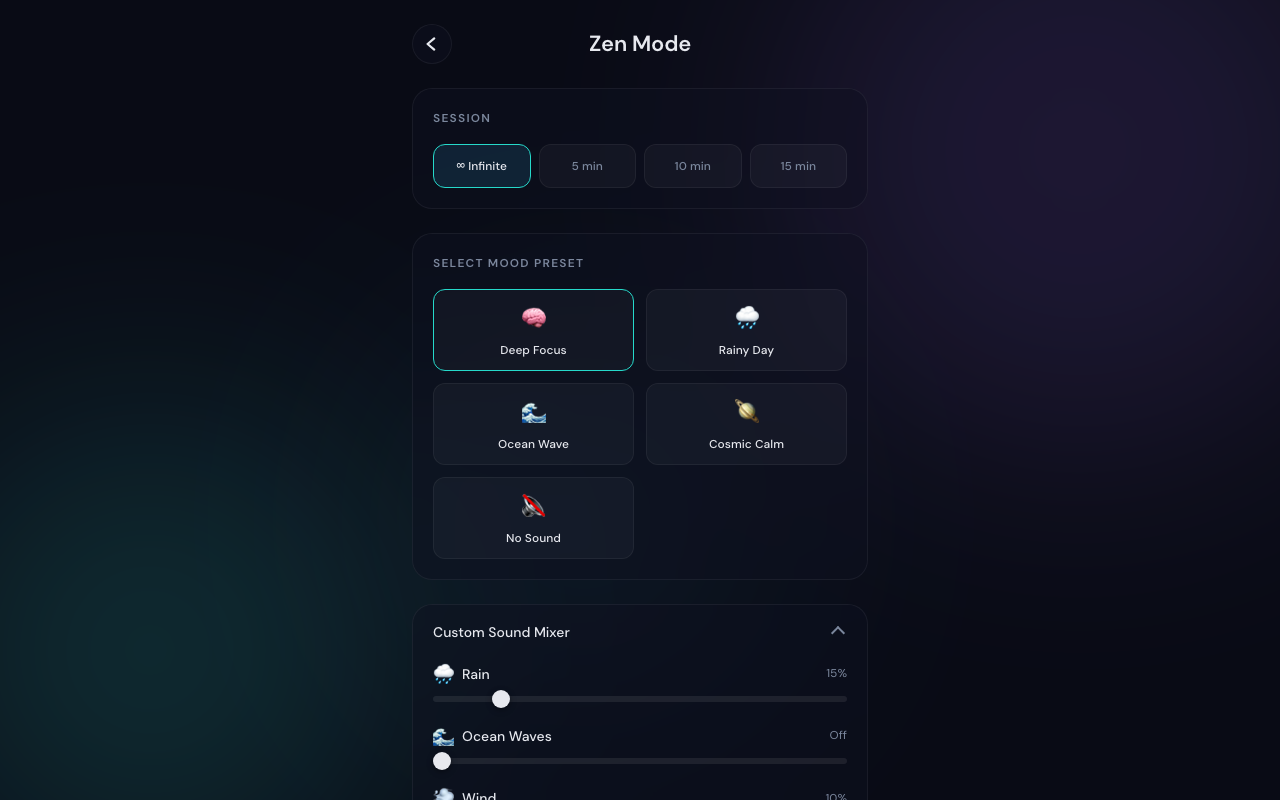
Zen Mode can wrap you in steady rain or brown noise to mask harsh sound, and games like Lumen give you a single gentle thing to rest your attention on while you come back down. It opens in a browser tab, so it is there the moment you need less.
Try Ponoki free
Ten calming games and a companion that grows when you show up. No download, no ads, free to play.
Open Ponoki, it is freeFrequently asked questions
What helps with sensory overload?
Reduce input first: noise-cancelling headphones, dimmer light, a quieter space. Then use steady sound (brown noise or rain), a single soft focus point, and slow breathing to come down. Ponoki bundles the calm-sound and soft-focus parts.
Are there low-stimulation games for autistic adults?
Yes. Look for dark, quiet, ad-free games with no flashing or timers. Ponoki is designed to be low-stimulation, with soft visuals and a built-in calming sound mixer.
What should I avoid during sensory overload?
Avoid bright, loud, fast games, anything with ads or flashing effects, and doomscrolling. The aim is less input, not more. Step away from the overwhelming environment if you can.