When stress hits, your breathing speeds up and goes shallow without you noticing. Your body reads that fast, tight breathing as a sign that something is wrong, which keeps the stress rolling. The good news: you can nudge the whole system back the other way just by changing how you breathe. That is the simple idea behind 4-7-8.
Here is what it is, why the slow exhale does the heavy lifting, how to actually practice it, and a few gentle ways to make it stick.
1. What is 4-7-8 Breathing?
4-7-8 breathing is a structured respiration protocol characterized by a specific time ratio: inhaling quietly through the nose for 4 seconds, holding the breath gently for 7 seconds, and exhaling audibly for 8 seconds. It grew out of traditional pranayama breathing, and it is a well known way to take the edge off when your body is running hot.
2. Why a long exhale calms you down
The primary neurological driver of paced respiration is respiratory sinus arrhythmia (RSA). During inhalation, heart rate slightly increases; during exhalation, vagal brake activation slows the heart rate down. By extending the exhalation phase to twice the duration of the inhalation (4 seconds in, 8 seconds out), 4-7-8 breathing maximizes vagal nerve stimulation and lowers systemic cortisol.
What the research shows: A controlled clinical trial published in Cell Reports Medicine demonstrated that daily structured breathwork with prolonged exhalation significantly improved mood and reduced physiological arousal more effectively than mindfulness meditation alone (Balban et al., Stanford University School of Medicine, 2023).
3. Step-by-Step Practice Instructions
To perform 4-7-8 breathing safely and effectively:
- Find a stable posture: Sit upright with comfortably relaxed shoulders or lie flat on your back.
- Rest your tongue: Gently place the tip of your tongue against the ridge of tissue just behind your upper front teeth.
- Inhale for 4 seconds: Close your mouth and inhale quietly and smoothly through your nose to a mental count of four.
- Hold for 7 seconds: Maintain the air comfortably without straining or clamping your airway.
- Exhale for 8 seconds: Open your mouth slightly and make a soft "whoosh" sound as you exhale completely over eight seconds.
- Repeat 4 cycles: Complete four full breaths per session.
4. Scientific Benefits Supported by Research
Research across neurobiology and respiratory physiology indicates that structured 4-7-8 pacing supports:
- Rapid sympathetic de-escalation: Lowering acute heart rate variability (HRV) stress markers within minutes.
- Reduced sleep onset latency: Helping individuals fall asleep faster by dampening cognitive rumination.
- Improved emotional regulation: Providing an accessible somatic anchor during episodes of sensory overload.
5. A Few Sensible Cautions
While safe for most adults, individuals with severe respiratory conditions (such as asthma or COPD) should practice with caution. If holding the breath for 7 seconds causes lightheadedness or breathlessness, reduce the overall duration while maintaining the 1:2 ratio (for example, inhaling for 2 seconds, holding for 3.5 seconds, and exhaling for 4 seconds).
6. Different Ways to Practice
Individuals can implement paced breathwork through multiple supportive modalities:
- Internal counting: Silently counting seconds during quiet reflection.
- Audio guidance: Listening to metronomes or gentle ambient musical intervals.
- Interactive somatic games: Using visual bio-feedback where game elements sync directly with your breath cadence.
7. Where Interactive Tools & Ponoki Fit
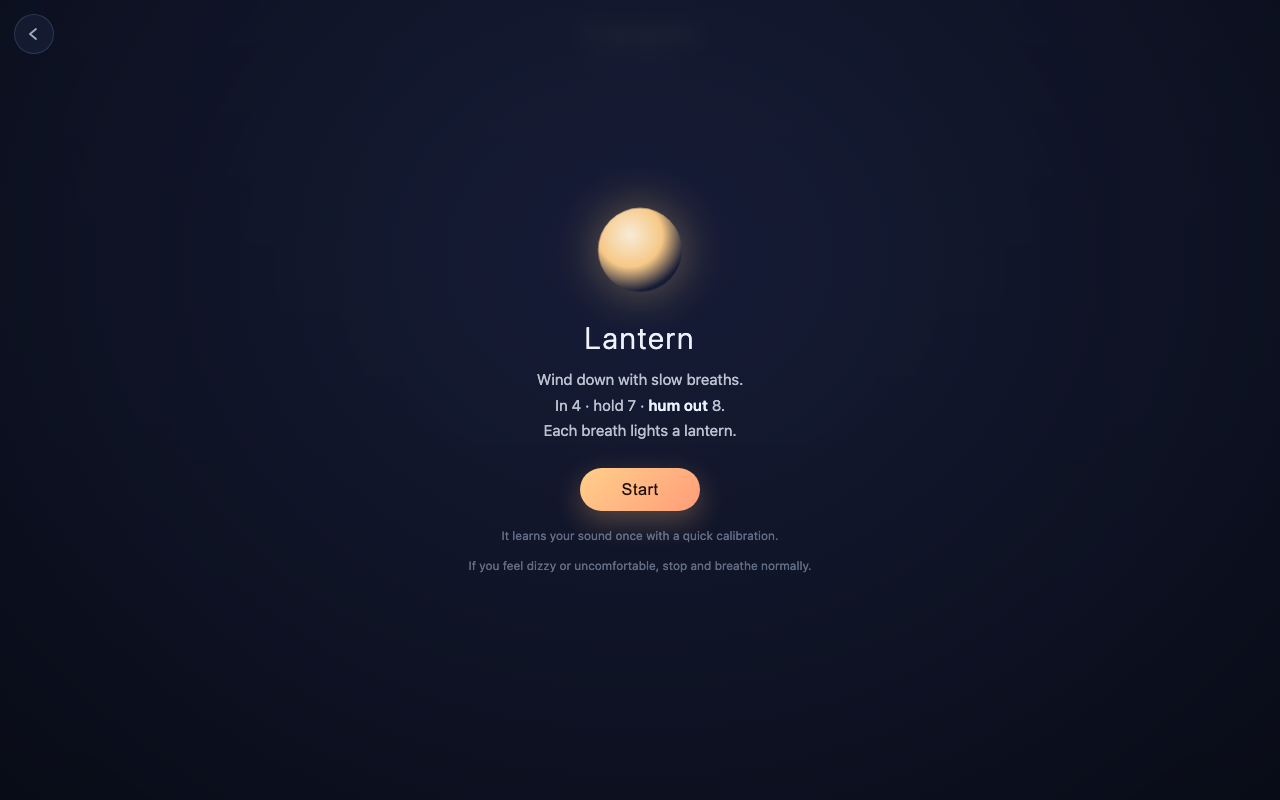
For individuals with ADHD or active anxiety, internal counting can feel tedious or demanding. To offer a gentle visual alternative, Ponoki includes Lantern.
In Lantern, users guide a glowing paper lantern along a peaceful night river. Instead of forcing numerical counts, the lantern gently rises during the 4-second inhalation, hovers calmly during the 7-second hold, and floats across the water during the 8-second exhalation. By externalizing the pacing into an intuitive visual interaction, Lantern supports relaxation without cognitive overload.
8. External Scientific References
- Balban, M. Y., et al. (2023). Brief structured respiration practices enhance mood and reduce physiological arousal. Cell Reports Medicine, 4(1), 100895. View Study on PubMed
- Zaccaro, A., et al. (2018). How Breath-Control Can Change Your Life: A Systematic Review on Psycho-Physiological Correlates of Slow Breathing. Frontiers in Human Neuroscience, 12, 353. View Review on NCBI
9. Frequently Asked Questions
How many cycles of 4-7-8 breathing should beginners do?
Most teachers suggest starting with no more than 4 continuous breath cycles per session during the first month of practice to avoid lightheadedness.
Can I practice 4-7-8 breathing lying down before sleep?
Yes. Lying supine naturally supports diaphragmatic descent and makes 4-7-8 breathing an effective transition tool before sleep.