While many stress relief instructions suggest taking deep breaths, inhaling too deeply without extending the exhalation can actually increase physiological arousal. Extending exhalation duration relative to inhalation is key to engaging the body's natural calming reflex.
This educational guide explores the neurobiology of prolonged exhalation, vagal brake signaling, practical exhalation pacing protocols, and visual tools.
1. What is Prolonged Exhalation Pacing?
Prolonged exhalation pacing involves consciously slowing down the outflow of air so that exhalation lasts longer than inhalation. A standard ratio is 1:2 (for example, inhaling for 3 seconds and exhaling for 6 seconds).
2. Neurobiology of Vagal Brake Signaling
The vagus nerve (cranial nerve X) acts as the primary braking system for the heart. During prolonged exhalation, baroreceptors in the aortic arch detect blood pressure changes and signal the nucleus tractus solitarius to release acetylcholine at the sinoatrial node, rapidly lowering cardiac rhythm.
What the research shows: Research published in Psychophysiology confirmed that extending exhalation duration significantly increases vagally mediated heart rate variability (HRV) compared to symmetric respiration protocols (Allen & Friedman, 2012).
3. Step-by-Step Practice Instructions
To practice prolonged exhalation pacing:
- Inhale gently for 3 seconds: Draw a smooth, quiet breath through the nostrils.
- Pause for 1 second: Let your ribs settle without clamping your throat.
- Exhale smoothly for 6 seconds: Purse your lips slightly and release the air out gradually.
- Repeat for 2 minutes: Maintain smooth, unforced pacing.
4. Benefits Supported by Research
Prolonged exhalation pacing directly lowers blood pressure, reduces acute panic symptoms, and dampens hyperventilation tendencies during stress.
5. Limitations and Considerations
Do not force exhalations to the point of gasping. The breath should always remain smooth, comfortable, and sustainable.
6. Different Ways to Practice
Practice methods include:
- Pursed-lip breathing: Creating gentle resistance with lips to naturally slow air release.
- Straw breathing: Exhaling through a small drinking straw.
- Visual pacing games: Following interactive visual targets that guide exhalation duration.
7. Where Interactive Tools & Ponoki Fit
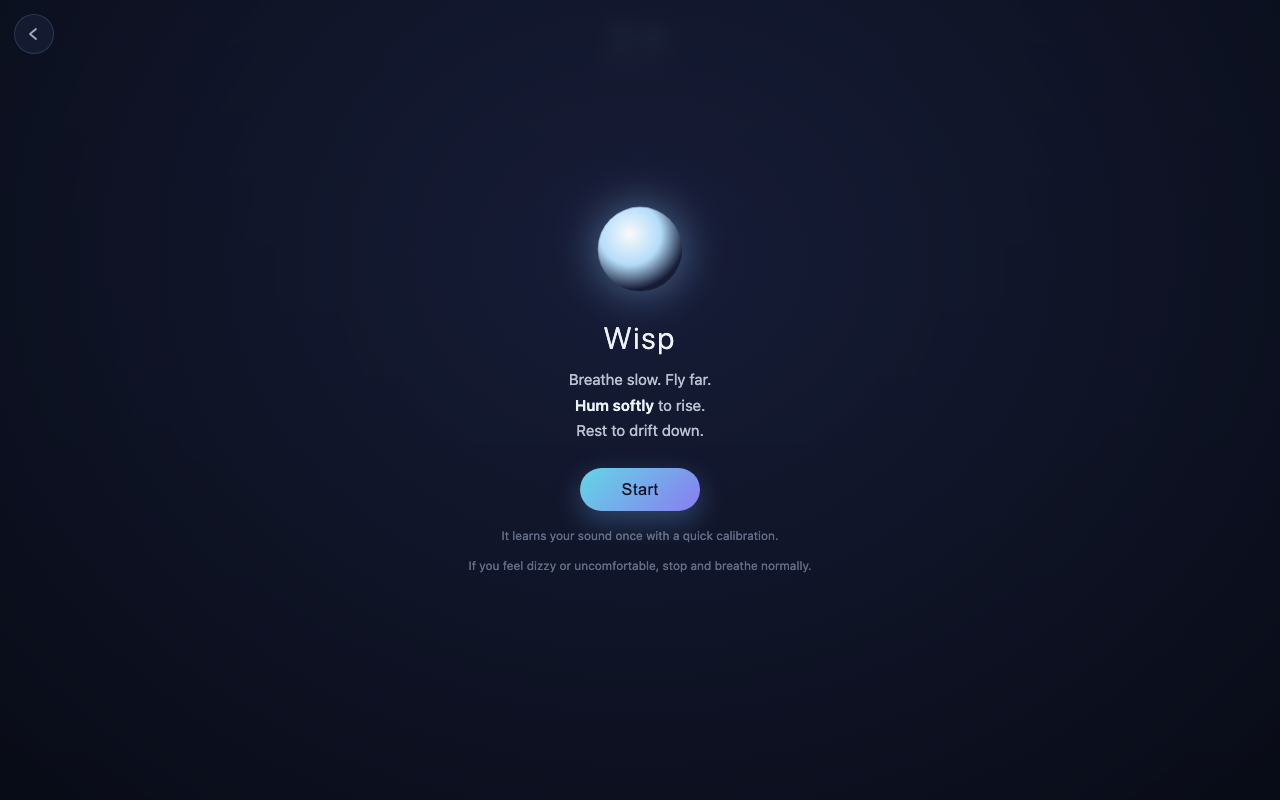
To provide smooth visual pacing for prolonged exhalation, Ponoki offers Wisp.
In Wisp, users guide a glowing sphere across a peaceful twilight forest. The sphere ascends gently during inhalation and glides smoothly across the horizon during the extended exhalation phase, helping users pace their breath visually.
8. External Scientific References
- Allen, B., & Friedman, B. H. (2012). Threatening autonomic reactivity: Exhalation duration influences cardiovascular stress recovery. Psychophysiology, 49(4), 467-474. View Study on PubMed
9. Frequently Asked Questions
Why is exhalation more relaxing than inhalation?
During inhalation, sympathetic pathways slightly increase heart rate. Exhalation stimulates vagal brake activity via acetylcholine secretion at the sinoatrial node, slowing heart rate.
What is the optimal exhalation to inhalation ratio?
A 1:2 ratio (such as a 3-second inhale followed by a 6-second exhale) provides optimal parasympathetic stimulation for most adults.