Traditional mindfulness instructions often ask practitioners to close their eyes and focus strictly on internal breath sensations. For individuals with ADHD or acute anxiety, removing external visual stimuli can lead to intrusive mind-wandering. Visual breathing anchors provide an external focal point that gently supports sustained attention.
This educational guide examines cross-modal sensory integration, exogenous visual attention capture, practice protocols, and bioluminescent biofeedback design.
1. What is a Visual Breathing Anchor?
A visual breathing anchor is a dynamic external visual stimulus (such as an expanding and contracting glowing sphere) that moves in direct synchronization with a desired breath cadence. By giving the eyes a soothing focal point, visual anchors reduce internal distractions.
2. Neuroscience of Exogenous Attention Capture
The human visual cortex naturally tracks smooth, rhythmic motion. When visual cues match respiration rhythms, cross-modal integration occurs between visual processing regions and autonomic motor control centers, lowering cognitive strain.
Research Citation: Neuroscience research published in NeuroImage demonstrated that synchronized visual feedback during paced respiration increases functional connectivity between attentional networks and parasympathetic brainstem nuclei (Chittoor et al., 2021).
3. Step-by-Step Practice Instructions
To use a visual breathing anchor effectively:
- Position your screen comfortably: Place your display at eye level about 18 to 24 inches away.
- Soft-focus your gaze: Rest your eyes gently on the expanding visual target without straining.
- Sync your inhalation: Breathe in smoothly as the light expands.
- Sync your exhalation: Release your breath as the light gently contracts.
4. Benefits Supported by Research
Visual anchors lower the mental effort required to maintain respiration rhythms and help neurodivergent users stay engaged without feeling frustrated.
5. Limitations and Considerations
Ensure display brightness is set to a comfortable level, especially before bedtime, to avoid eye fatigue.
6. Different Ways to Practice
Visual anchors can be practiced using:
- Physical kinetic objects: Expanding breathing spheres (Hoberman spheres).
- Ambient light projections: Ceiling projectors that pulse softly.
- Interactive digital biofeedback: Web and mobile apps designed with synchronized visual motion.
7. Where Interactive Tools & Ponoki Fit
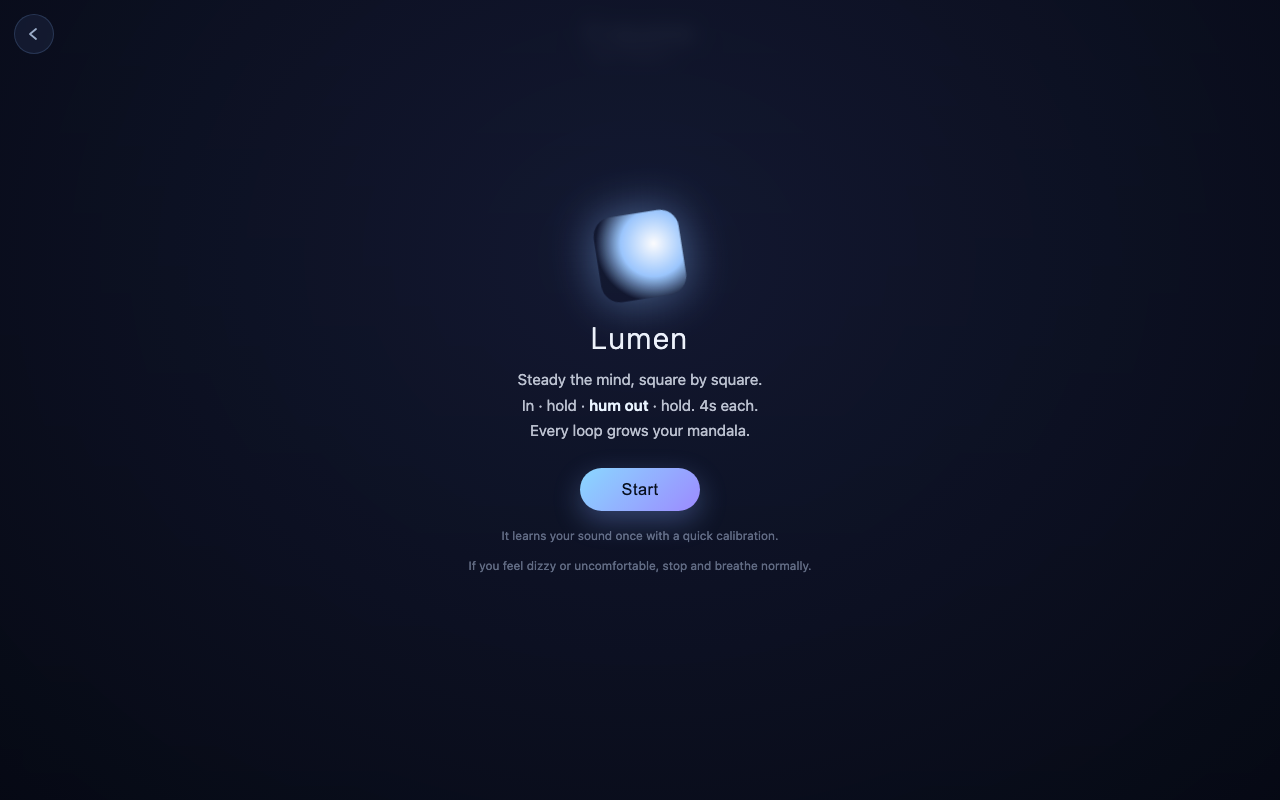
To deliver a soothing bioluminescent breathing anchor, Ponoki features Lumen.
Lumen provides a gentle bioluminescent organism that expands during inhalation and settles softly during exhalation. By anchoring visual attention externally, Lumen helps users maintain calm breathing rhythms.
8. External Scientific References
- Chittoor, H., et al. (2021). Visual biofeedback during slow breathing modulates brain functional connectivity. NeuroImage, 244, 118596. View Study on PubMed
9. Frequently Asked Questions
What is a visual breathing anchor?
A visual breathing anchor is an external moving visual target (such as an expanding and contracting sphere) that synchronizes with your breath cadence to reduce cognitive distractions.
Why do eyes-closed meditation instructions sometimes fail for ADHD?
Closing the eyes removes external sensory input, which can lead to rapid internal mind-wandering or intrusive thoughts for neurodivergent individuals.