For neurodivergent individuals experiencing sensory overload or executive fatigue, high-stakes games and rapid notifications can amplify arousal rather than resolve it. Low-stakes tactile interaction provides reassuring somatic feedback without cognitive demands.
This educational guide examines the neurobiology of sensory grounding, dopamine regulation in ADHD, tactile feedback loops, and non-demanding interaction design.
1. What is Low-Stakes Sensory Grounding?
Sensory grounding involves using gentle tactile or physical sensations to anchor attention to the present moment. A low-stakes practice has zero failure states, no countdown timers, and no penalties.
2. Neurobiology of Dopamine Regulation in ADHD
ADHD neurophysiology involves differences in prefrontal cortical dopamine signaling. Controlled motor movement (fidgeting or rhythmic popping) provides baseline sensory input that optimizes cortical arousal and reduces restless agitation.
What the research shows: Research published in the Journal of Attention Disorders demonstrated that controlled motor movement during cognitive tasks significantly improves working memory accuracy in individuals with ADHD (Hartanto et al., 2016).
3. Step-by-Step Practice Instructions
To use sensory grounding effectively:
- Select a responsive tactile tool: Choose an object that responds immediately to your touch.
- Focus on physical sensation: Notice the texture, resistance, and release of the movement.
- Maintain gentle pacing: Move at whatever cadence feels naturally soothing.
4. Benefits Supported by Research
Sensory grounding interrupts sensory overload, supports attentional self-regulation, and provides healthy dopamine regulation without screen addiction.
5. Limitations and Considerations
Grounding tools are designed for acute sensory de-escalation and focus support; they work best as one part of a bigger toolkit, alongside the support of a professional when you need it.
6. Different Ways to Practice
Sensory grounding can be practiced through:
- Physical fidget tools: Silicone pop mats, smooth stones, or textured worry coins.
- Somatic grounding exercises: The 5-4-3-2-1 sensory observation technique.
- Interactive digital feedback: Responsive touchscreen interactions with soft audio haptics.
7. Where Interactive Tools & Ponoki Fit
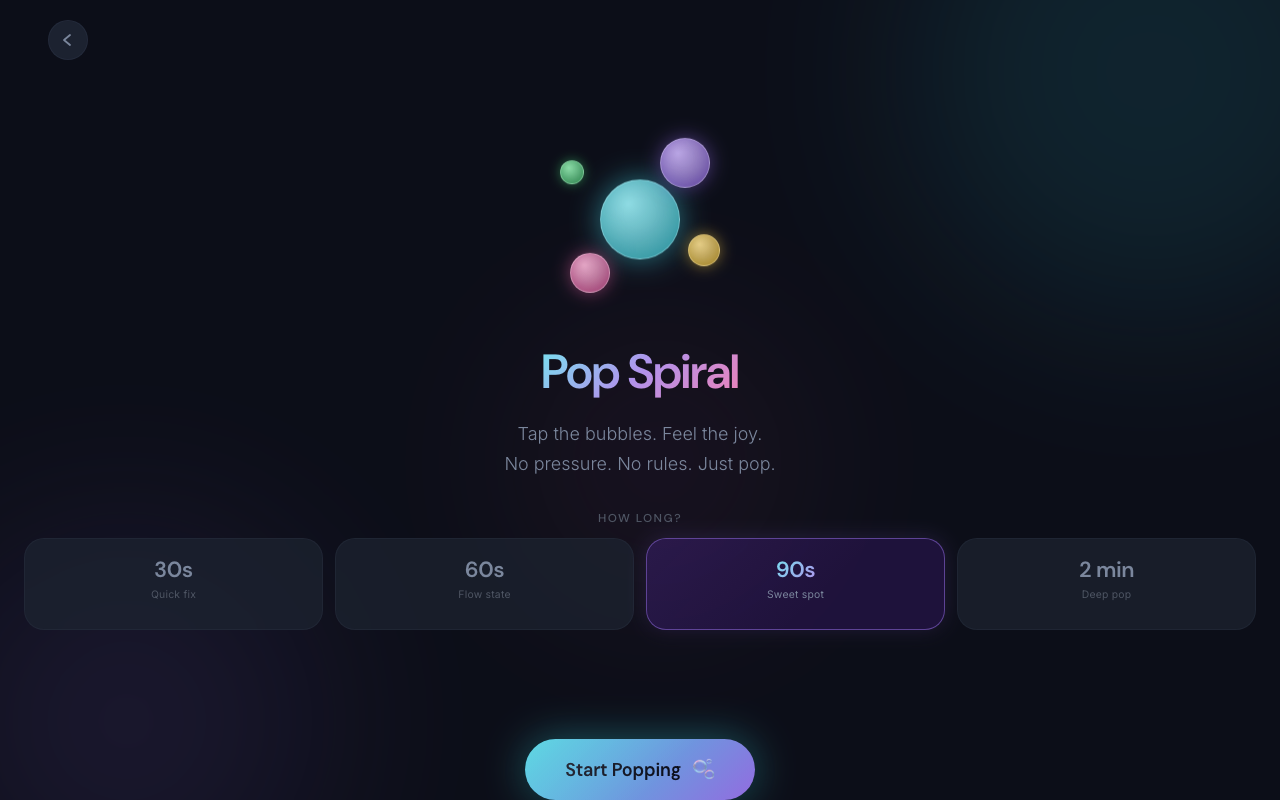
To provide responsive, zero-pressure tactile feedback, Ponoki includes Pop Spiral.
Pop Spiral allows users to press glowing nodes along a hypnotic spiral path. With crisp auditory feedback and zero timers or failure states, Pop Spiral delivers low-stakes sensory grounding.
8. External Scientific References
- Hartanto, T. A., et al. (2016). A trial-by-trial analysis reveals more intense physical activity is associated with better cognitive control performance in ADHD. Journal of Attention Disorders, 20(6), 514-522. View Study on PubMed
9. Frequently Asked Questions
Why do fidget tools help people with ADHD concentrate?
Controlled motor activity provides low-stakes dopamine stimulation that satisfies baseline nervous system arousal, freeing executive attention for primary tasks.
What makes a tactile grounding tool low-stakes?
A low-stakes tool has no win or lose conditions, no penalties, and no countdown timers.