Prolonged focus on spreadsheets, coding, or high-alert environments causes Directed Attention Fatigue (DAF). When prefrontal inhibitory mechanisms deplete, irritability and focus errors spike. Attention Restoration Theory (ART) demonstrates that engaging in "soft fascination" replenishes executive capacity.
This educational guide explores Attention Restoration Theory, the difference between hard and soft fascination, micro-restorative practices, and ambient interactive design.
1. What is Attention Restoration Theory (ART)?
Formulated by environmental psychologists Stephen and Rachel Kaplan, Attention Restoration Theory proposes that directed attention requires effortful cognitive filtering. Soft fascination (such as observing gentle natural motion) engages involuntary attention without mental effort, allowing prefrontal resources to replenish.
2. Neuroscience of Directed Attention Fatigue
Directed attention depends on the dorsolateral prefrontal cortex blocking competing stimuli. As cognitive fatigue accumulates, inhibitory transmitters deplete. Soft fascination allows this circuit to rest completely.
Research Citation: Cognitive research published in Psychological Science demonstrated that exposure to restorative natural environments or soft fascination stimuli significantly improves subsequent memory and executive function (Berman, Jonides, & Kaplan, 2008).
3. Step-by-Step Restorative Practice
To practice soft fascination during a busy workday:
- Step away from demanding tasks: Pause problem-solving for 5 minutes.
- Observe organic, unforced motion: Look out at moving clouds, rustling leaves, or gentle twilight animations.
- Let your gaze soften: Allow your eyes to rest without trying to analyze what you see.
4. Benefits Supported by Research
Soft fascination reduces cognitive burnout, replenishes directed attention, and improves mood stability.
5. Limitations and Considerations
Restorative soft fascination does not eliminate the need for proper sleep and workload balance.
6. Different Ways to Practice
Soft fascination can be experienced via:
- Nature walks: Spending time in parks or forests.
- Window observation: Watching rain or wind outside.
- Ambient digital sanctuaries: Calming interactive nature simulations.
7. Where Interactive Tools & Ponoki Fit
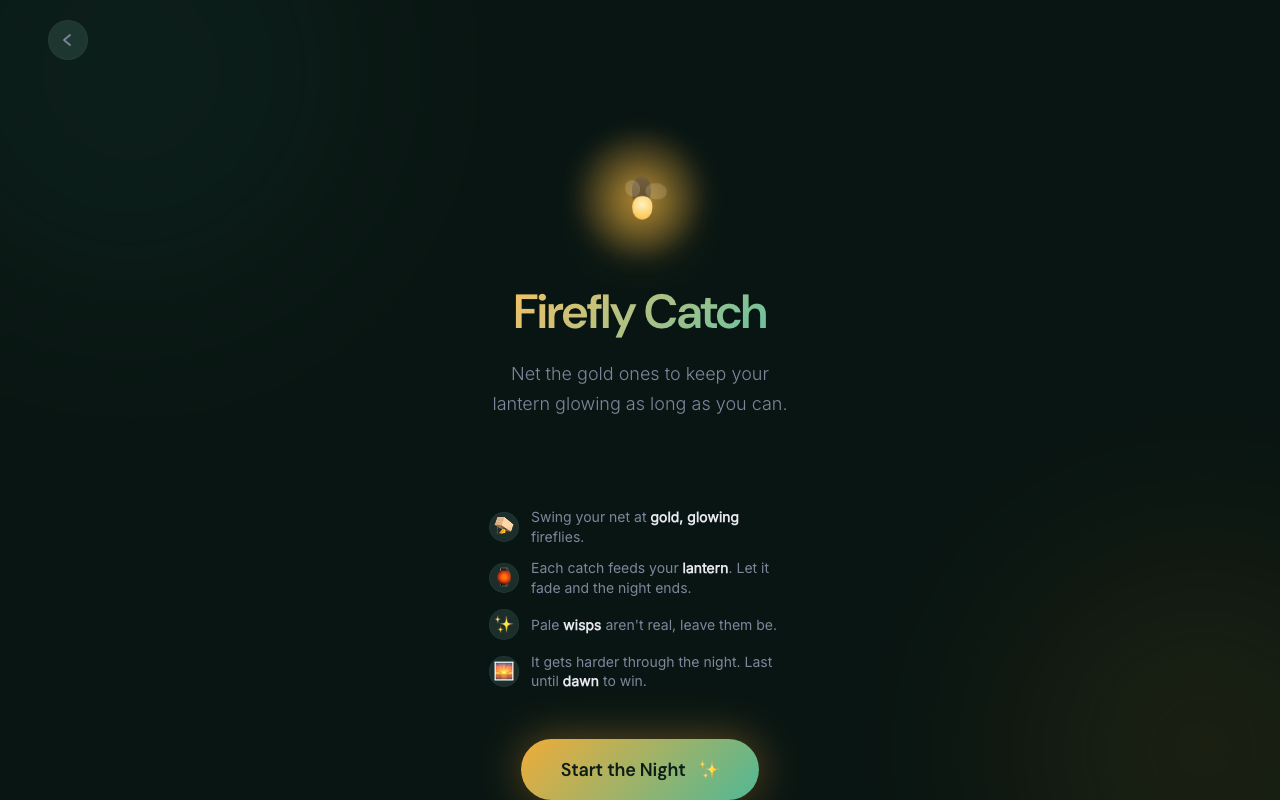
To provide accessible soft fascination anywhere, Ponoki includes Firefly Catch.
In Firefly Catch, users rest their attention in a tranquil twilight meadow as glowing fireflies drift across the screen. With zero timers or competitive pressure, Firefly Catch offers restorative soft fascination.
8. External Scientific References
- Berman, M. G., Jonides, J., & Kaplan, S. (2008). The Cognitive Benefits of Interacting With Nature. Psychological Science, 19(12), 1207-1212. View Study on PubMed
9. Frequently Asked Questions
What is the difference between hard fascination and soft fascination?
Hard fascination (such as watching action movies or competitive sports) dominates attention and prevents reflection. Soft fascination (watching clouds, streams, or fireflies) gently holds interest while allowing internal cognitive recovery.
How long does it take to restore mental fatigue?
Studies demonstrate that even micro-breaks of 4 to 10 minutes engaging soft fascination can measurably replenish executive attention.