Auditory distractions in shared environments disrupt working memory and attention. For individuals with ADHD, auditory gating differences mean sudden sounds capture attention immediately. Acoustic masking uses steady sound profiles to reduce environmental contrast.
This educational guide examines the acoustic physics of brown noise, stochastic resonance in ADHD, practice protocols, and ambient sound mixers.
1. What is Brown Noise & Acoustic Masking?
Brown noise (named after Brownian motion) drops in energy by 6 decibels per octave, producing a deep, low-frequency roar resembling ocean surf or distant thunder. Acoustic masking works by raising the ambient threshold so transient environmental noises blend in.
2. Neuroscience of Stochastic Resonance in ADHD
Stochastic resonance is a neurobiological phenomenon where a moderate level of background sensory noise improves the brain's ability to detect task-relevant signals. In ADHD brains with lower baseline dopamine arousal, acoustic masking stabilizes cortical alertness.
What the research shows: Research published in the Journal of Child Psychology and Psychiatry demonstrated that auditory background noise significantly improves cognitive task performance in children and young adults with ADHD (Söderlund et al., 2007).
3. Step-by-Step Acoustic Setup
To use acoustic masking for focus:
- Select comfortable headphones: Use over-ear headphones or quality stereo speakers.
- Set a conversational volume: Keep sound levels around 50 to 60 decibels.
- Layer ambient profiles: Combine deep brown noise with soft rain or forest ambiance.
4. Benefits Supported by Research
Brown noise improves working memory continuity, reduces auditory startle reactions, and supports sustained reading and coding focus.
5. Limitations and Considerations
Keep listening volume safe (below 70 decibels) to prevent auditory fatigue during extended focus blocks.
6. Different Ways to Practice
Acoustic masking is accessed via:
- Physical white noise machines: Standalone mechanical sound generators.
- Audio streaming files: Long ambient soundtracks.
- Customizable interactive sound mixers: Web tools allowing personalized layering.
7. Where Interactive Tools & Ponoki Fit
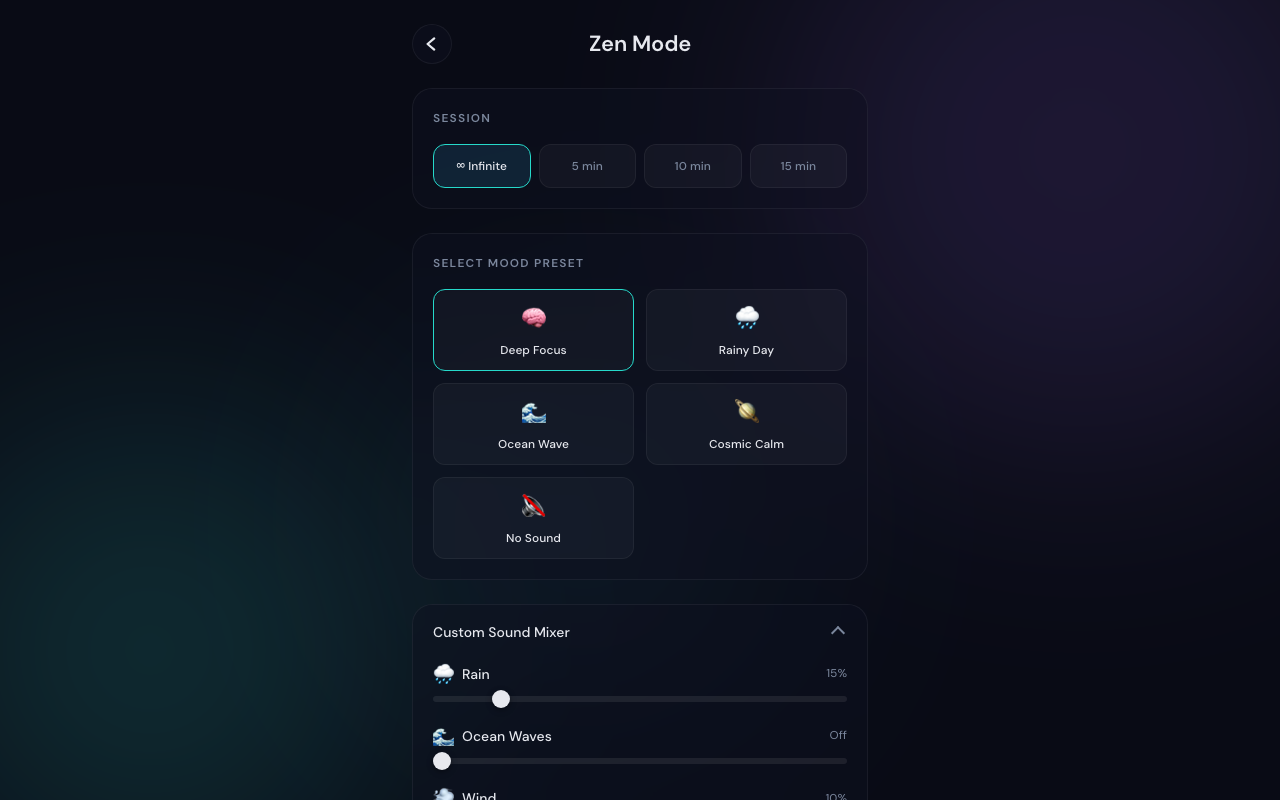
To provide custom ambient layering, Ponoki features Zen Mixer.
Zen Mixer allows users to customize their ideal acoustic masking profile by blending soft rainfall, rustling forest winds, and resonant harmonic tones into a cohesive focus soundscape.
8. External Scientific References
- Söderlund, G., et al. (2007). Noise improves cognitive performance in ADHD children. Journal of Child Psychology and Psychiatry, 48(8), 840-847. View Study on PubMed
9. Frequently Asked Questions
What is the difference between white, pink, and brown noise?
White noise has equal power across all frequencies. Pink noise reduces higher frequencies proportionally. Brown noise reduces high frequencies even further, producing a deep, rumble-like roar similar to ocean waves or waterfalls.
What is stochastic resonance in ADHD?
Stochastic resonance is a phenomenon where adding a moderate amount of background auditory noise enhances neural signal-to-noise detection in under-aroused dopamine pathways.